
Leave her alone!

Don’t interfere …

yellow flower in macro lens

Mark’s Gospel is punchy – always carrying drama and more binge-worthy than any Netflix series. As you read it, there are signs and wonders, amazement, and more ‘suddenly’s’ than a schoolchild could ever expect to get away with in their story writing. But here, for our purposes, where we pick our encounter up, the mood is shifting.

As we step into the intenseness of Mark 14that’s where we are going – there’s a thickness in the air – something foreboding, urgent. The mood music of Jesus’ ministry is changing. What began with wonder and open skies is now narrowing, darkening. The pace of Mark’s Gospel begins to tighten – each movement edged with tension, every conversation laced with the weight of what’s coming. It grips you, holds you, forbids you to stop reading or have a gadget break. The Cross, not yet in plain sight, stands firm in the distance. Imposing – and for the reader with eyes to see, it’s close. Very close. But Mark has a surprise.

Into this gathering storm, she walks in.

A woman. No title. No backstory. No invitation. Just an alabaster jar and an unshakable sense of timing. She’s not early. She’s not late. She arrives at the precise moment heaven had marked out – not for applause, but for anointing.

She doesn’t speak. She acts. She breaks the jar – not unscrews, not dabs – she breaks it. There’s no resealing it. No way to retrieve what’s poured out. It’s final. Intentional. Fragrant. The scent of pure nard – Nardostachys jatamansi, as my botanist friend might say – floods the room. Imported from the Himalayas, reserved for the highest of purposes. The common name? Spikenard. But what she carries is anything but common. It’s costly. Sacred. She pours it not into His hands, but onto His head. And the room shifts.

Not everyone likes it.

The protests rise. “Why this waste?” they say. They calculate, criticise, moralise – because nothing unnerves a religious spirit like unrestrained devotion. But before they can finish their objection, Jesus speaks. And His voice slices through the noise.

Ἄφετε αὐτήν. “You all – leave her alone.”

This is no casual defence. The Greek is sharp. It’s a command. “Release her. Stop interfering.” It’s rebuke and protection rolled into one. Jesus is not simply correcting a theological misstep – He’s silencing the voices that would dare diminish the weight of her worship.

And make no mistake – this is worship. Prophetic. Timely. She has done something no one else in that room could perceive. She has aligned her act with the very heartbeat of heaven. While others talk and barter and scheme, she prepares the Son of God for burial.

Yes, burial. Drop the mic in shock. Before the whip cracks, before the thorns pierce, before the nails tear through flesh – this woman steps in. She sees what others cannot. Responds not with words, but with scent. Stepping in, unannounced and unexpected, mirroring Jesus at Nain, she pours out all she has to anoint the One who would soon pour out all He has for the world.

And Jesus calls it beautiful. “She has done a beautiful thing to me,” He says. That word, beautiful – not simply about appearance, but timing, essence, depth. She has done the right thing at the right time. And because of that, He declares, “Wherever the gospel is preached in the whole world, what she has done will be told in memory of her.” (Mark 14:9, ESV)

This is not sentimentalism. This is legacy. Eternal, gospel-etched memory. The disciples will scatter. Peter will deny. Judas will betray. But she – she will be remembered, not for her name, but for her surrender.

She has done what she could.

That line ought to ring in our ears. Not “what was expected.” Not “what made sense.” But what she could. She held nothing back. And that, in the end, is what Jesus sees – the offering poured out with no strings, no caution, no exit strategy. The room smelled of spikenard, but heaven smelled worship.

So what’s your nard?

What is it the Lord has placed in your hands that feels too costly, too risky to break open? What offering have you tucked away for a more convenient time, a more understanding crowd, a safer room?

The call of this passage is not merely to admire the woman – it’s to become her. Because the same Jesus who defended her still defends those who break the jar. Those who choose presence over propriety. Those who worship when the world watches with suspicion. Those who move with heaven’s leading rather than human approval.

And yes, there will be critics. There always are. But listen closely – Jesus is still saying it:

Leave her alone. Leave him alone. They’ve done what they could.
He sees the sacrifice. He knows the cost. And He calls it beautiful.

So bring your jar. Break it. Pour it out. Let the scent of your surrender fill the places you walk. Let your life preach in ways words never could. Because true worship doesn’t just echo – it lingers. It gets in the walls. And it speaks of a Saviour who would soon be broken and poured out Himself.

Not in oil, but in blood.

And when the fragrance of your offering rises, heaven will know.
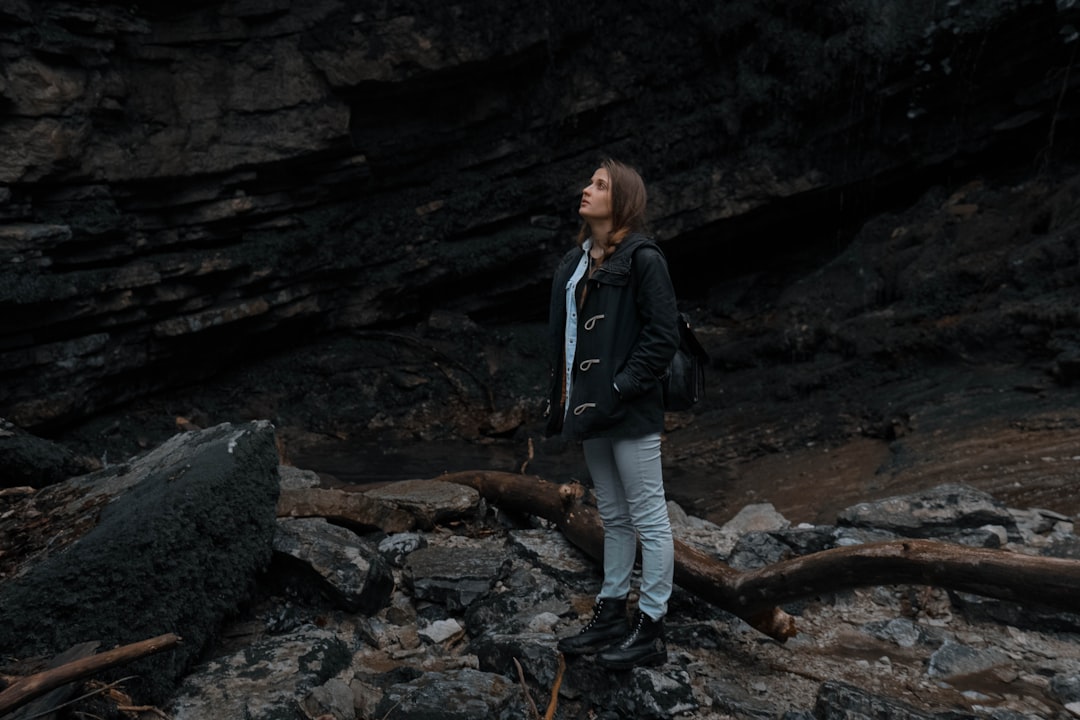
Straighten up, shoulders back

and raise your heads …

woman standing near rock formation

“Now when these things begin to take place, straighten up and raise your heads, because your redemption is drawing near.”Luke 21:28

Last night, I dreamed something unusual — no flying this time, or running with pails of fire, being tugged back by invisible hands. This time I stepped through the canvas of a round tent — not one built for camping, but a mobile museum of revival. Lots of people were gathered, watching, standing or sitting on the floor – amazed. Some cheered, clapped, and even cried, hugging themselves with folded arms as if lamenting. The air carried the library-scent of old hymnals and history. Around me, flickering images danced on the tent walls, reminding me of something I had seen in a coffee shop in downtown Beirut, showing Leonard Cohen on darkened walls singing Hineni, Hineni – these were black and white turning to colour, past and present tied together as images in a divinely inspired montage.

Flickering and crackling there, in the way old black and white films do, was William Branham – voice calm and eyes looking intent- quietly, almost shyly, calling out afflictions before praying for their healing. A.A. Allen wandered back and forth, firm, sweat on his face, commanding cancer to leave – and it did. Jack Coe, almost too loud and just as unstoppable, with energy, preaching with a fire that dared illness to remain. A late friend of mine whispered names and dates that only heaven and the person addressed could have known. Amy Semple McPherson, bold as a lioness, proclaiming the gospel in a theatre-turned-temple. Kathryn Kuhlman moved with a broken elegance, her hands trembling almost dancing with awe more than power.

So many others — known and unknown — their obedience echoing in that shimmering tent. And then, as dreams tend to do, the colour drained, the voices dimmed, and the tent faded — the people gone. Here we are. Not in sepia-toned nostalgia, but in the living present. And still, the same Spirit moves. God is still doing ‘stuff’ or better still, in the language of Narnia, “Aslan is (still) on the move!”

This is not a time for navel gazing, staring at the floor wondering, worrying, pondering. Jesus said, “Lift up your heads.” Not when the path is clear or the world agreeable, but when the sky darkens and the earth groans. He spoke it in the shadow of Jerusalem’s coming ruin — and for the days that would echo with its trembling. He was not calling for naïve optimism. He was commanding hope – the kind that stands when all else falls. Here we are.

These are such days. Wars no longer surprise us. Nations are more divided than aligned. Law is detached from righteousness. Morality is market-driven, and in the midst of it all, men cry “peace” without the Prince of Peace. We’ve built towers without foundations, and we are watching them totter, sway, fall and crash. Sounds bad, because it is…

Good news exists though – God’s people are not those who look out in fear — we look up in faith. Our hope is not seated in parliament or propped up by policy. It is anchored in a throne that will not be shaken. Christ’s words are sharper now than ever: “Raise your heads.” Not in pride. Not in ignorance. But in defiant trust. Our redemption is drawing near, and here we are– the Kingdom of God is advancing not withdrawing.

This isn’t just about surviving— it’s about aligning ourselves with what our God is doing, cooperating with the work of the Spirit in our hearts and lives. It’s not all bad news, far from it – alongside the shaking, there is an awakening — some are calling it the ‘quiet’ revival. The outpouring of the Spirit is not a legend — it’s happening. In houses and halls, in cities and school halls. The miracles are not museum pieces — they are present realities. The same Spirit that fell in Acts is falling still. Not as spectacle, but as sign — pointing us to the One who still heals, still speaks, still saves. Here we are, and there is the sound of angelic, kingdom activity.

Yes, there is a falling away — the Scriptures are clear — but there is also a Church that is emerging, rising, filled with the oil of intimacy and the fire of obedience. The true Church — the blood-bought, Spirit-filled, cross-centred people of God — are not dwindling, they’re deepening, learning how to walk with God in intimacy and obedience — overshadowed by grace and faith.

So, we do not panic — we prepare. The Spirit is clothing sons and daughters in power from on high, as He said He would. (Joel 2) The lame walk. The deaf hear. The gospel is preached with signs following — not as decoration, but as divine authentication. This is not a new third wave — it’s the same river, flowing from the same throne.

If your heart has grown cold, hear Jesus’ admonition: “Lift up your head.” If your hands hang limp, remember His were pierced. If your eyes have dimmed, fix them once more on the horizon. Redemption is not a concept — it is Christ Himself and He is coming.

We don’t just reminisce about revival — we live ready for it. We remember the tent of the past, yes. But more than that, we remember the God who filled it, and we declare with every fibre: Jesus is Lord. Jesus saves. Jesus baptises in the Holy Spirit. Jesus is coming again.

And that — that is why we lift up our heads.