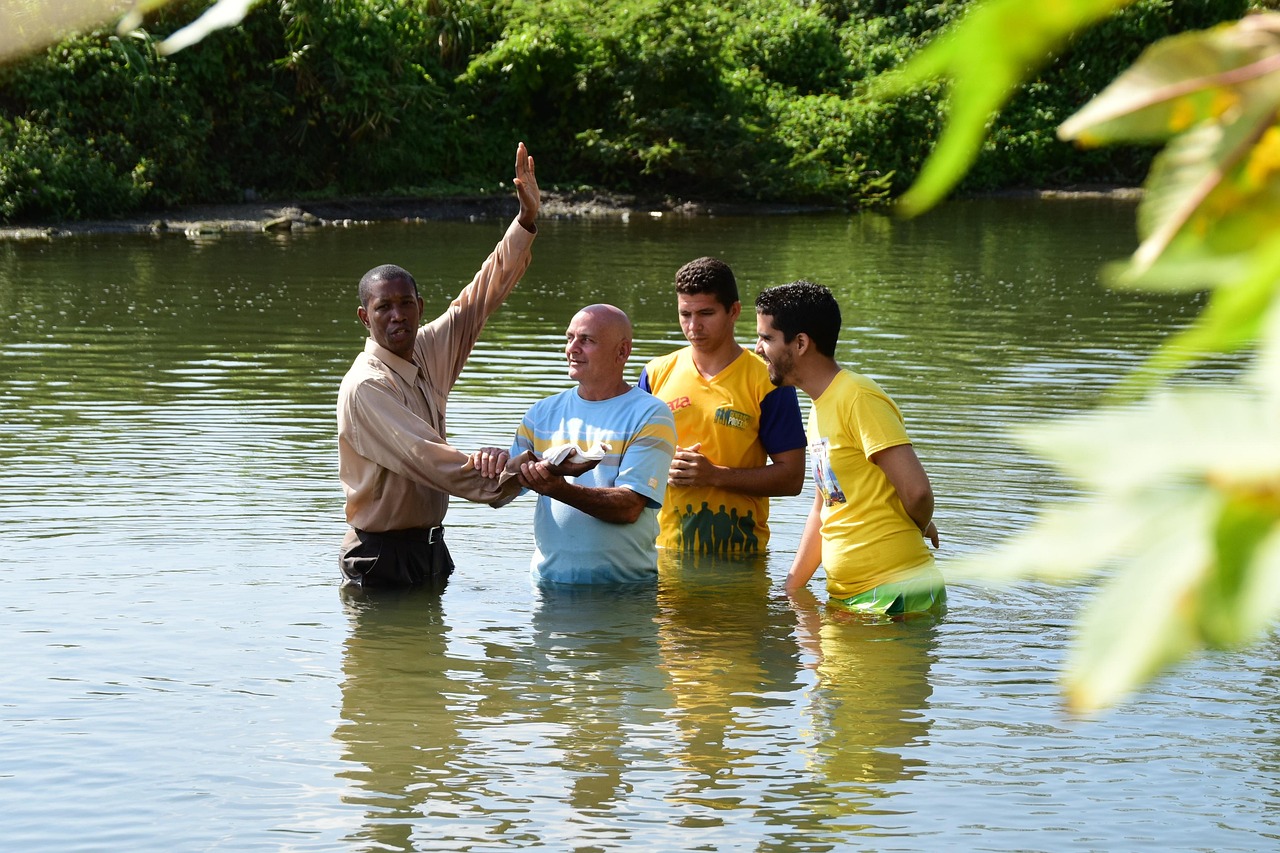
Water Baptism.

For everyone – what about ‘them’?
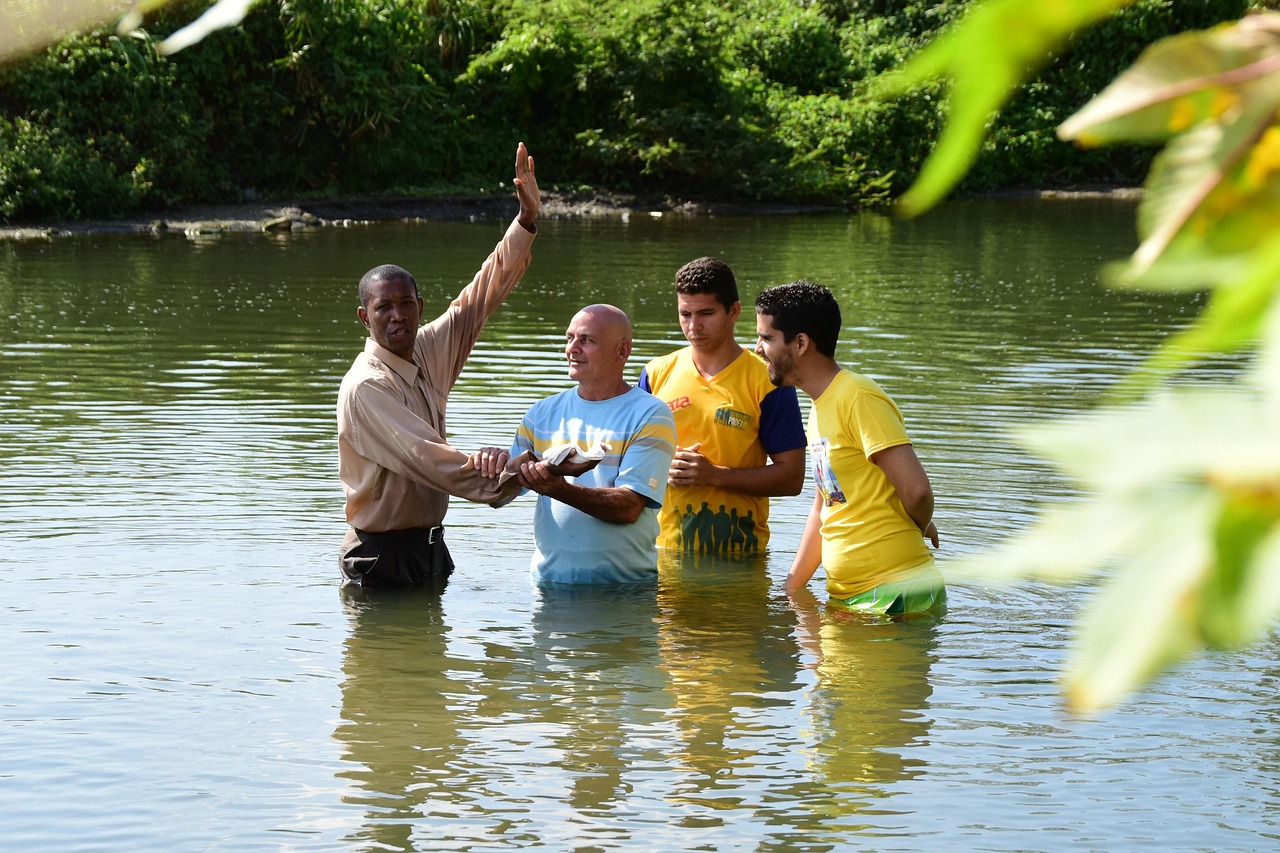
Free Cuban River photo and picture

You’ve heard about ‘the baptism’ at the Jordan River… There’s water—a river full and flowing—and then there’s the voice of heaven breaking through it.

When Jesus came up out of the Jordan, dripping wet, filled with the Spirit, marked by the approval of the Father, something shifted. Not just the landscape. The whole timeline of redemption moved. “This is my beloved Son, with whom I am well pleased” (Matthew 3:17). That moment—His baptism—was not mere symbol. It was heaven breaking silence. The Spirit descending in power. The beginning of the mission that would split history and pour out grace.

Now, to be clear at a baptism of repentance—Jesus didn’t need to repent. His baptism wasn’t for cleansing, but for consecration. Identification. Fulfilment of all righteousness. He stood in the water on behalf of sinners, to launch the kingdom and to mark the way for all who would follow Him… to do likewise.

It was a big deal but we read through it barely moved, pausing for a moment, then scrolling to the next thing as a gadget break on our phones.

When you think of baptism, don’t think ceremony. Don’t think tradition. Think identity. Think union with Christ(interlock the fingers of both hands and you have it). Death and life. Kingdom. This is burial with Jesus. This is rising with Him. The old you goes under. A new you comes up. Think weighty, awesome, consequential.

Paul wrote it like this: “We were buried therefore with him by baptism into death, in order that, just as Christ was raised from the dead… we too might walk in newness of life” (Romans 6:4). Baptism doesn’t mean you just got wet. It means you’ve surrendered. It means you’ve declared, “I don’t belong to me anymore. I belong to the crucified and risen King.” And you’re not whispering it—you’re letting the world know, and then probably celebrating over food with friends and family. It’s a big deal – and a good one.

Somewhere along the line, we got soft. Not clueless, just… casual. We made it optional, take it or leave it. A personal choice. Even forgettable. But Jesus didn’t. He began His ministry with baptism. He commanded it at the end: “Go therefore and make disciples of all nations, baptising them…” (Matthew 28:19). If you’re serious about following Jesus, you go where He went, and He went into the water.

Let’s be honest—maybe the most convicting thing about baptism is knowing you should’ve done it long ago, but you’ve delayed it, postponed obedience. Maybe you’ve wanted to do it on your own terms, but baptism isn’t about convenience. It’s about allegiance and fierce loyalty to Jesus.

And let’s be clear again: this isn’t just about water. Water baptism is obedience—it’s the outward sign of an inward surrender. But it points to something more. When Jesus was baptised in water, the heavens opened.

The Spirit descended. Not for cleansing—He was already pure—but to anoint Him for the mission ahead. It was the Spirit resting on the Son, the Father’s voice breaking through the silence of centuries. And John made it plain: “I baptise you with water for repentance, but he who is coming after me… will baptise you with the Holy Spirit and fire” (Matthew 3:11). That’s a separate baptism. Not with water, but with power. Not symbolic, but supernatural. The Spirit still comes. The fire still falls. The same power that raised Christ from the dead now lives in us—and that’s not just history. That’s inheritance.

You’ve probably spotted the question mark here; what about the disciples—were they baptised? Scripture doesn’t spotlight it, but it hints. John 3:22 says Jesus and His disciples were baptising. Then John 4:2 adds that Jesus Himself didn’t baptise—His disciples did. In a world where no disciple did what he hadn’t first received, that tells you something. The Gospels aren’t focused on Peter’s plunge, or even for Judas – did he, didn’t he?. They’re focused on Christ’s cross, but the pattern holds: belief, baptism, Spirit. You can’t pass on what you haven’t received.

Still, no pressure. But let’s not confuse grace with passivity. Grace compels obedience like an ejection seat in fighter jet. Maybe baptism feels heavy for you. Maybe you’ve followed Jesus for years but never stepped into the water. Maybe you intended to once, but the moment was muddied—by pressure, confusion, or shame. Maybe you think you’re too late, too broken, too far gone. Well, (see what I did there!) the water isn’t for the clean. It’s for the willing. The broken. The ones who know they can’t fix themselves.

And this isn’t a solo act. Everyone is watching, ready to cheer and clap, cry, take photos or videos and worship. Baptism pulls you into something far bigger: A family, a people. You’re not just saying yes to Jesus—you’re saying yes to His body. In the early Church, baptism wasn’t private. It was entry level ‘stuff’. You weren’t baptised into a vacuum. You were baptised into the Church. And when you come up from that water, gasping for air, you’re not alone. You’re home.

Baptism leans and looks forward. It’s not just a picture of your past. It’s a promise of your future. Just as Christ rose, so will you. Baptism ties your story to resurrection, plants your feet in eternity and whispers of that coming day when every grave gives way and the new creation floods in like morning light.

So no—baptism isn’t a box to tick. It’s a line in the sand, a step into the mystery, into obedience, family and into fire. It’s where the gospel moves from theory to testimony, from something you know, to something you live.

So, step into the water. The world might shrug, but heaven will stand to its feet and somewhere, you just might hear that voice again— “This is my beloved…”

A New Old Way

an alternative “Word & Spirit” approach…

glass cup filled with ice latte on tabletop

John 16:13 – “When the Spirit of truth comes, he will guide you into all the truth…”

There comes a moment in every generation when the people of God must stop surveying and admiring the landscape and start walking the path. Spectating or participating… Jonathan Edwards once said, “The task of every generation is to discover in which direction the sovereign Redeemer is moving, then move in that direction.” And there it is. Not to sit debating the signs, or drawing new lines in the sand between what we think is Word and what we think is Spirit. We’re not meant to take sides. It sounds simplistic, but it’s true: we’re meant to follow the Lamb wherever He goes.

Over the years, there’s been a lot of talk, many flags lifted high over one camp or the other—“Word people,” “Spirit people.” As if Jesus could actually be divided, or as if the same God who spoke creation into being by His Word now whispers direction through His Spirit and expects us to choose between the two. A divine, “pick me!” challenge.

The Bible never offers a dichotomy of Word or Spirit. It’s simply not a choice – it offers a divine unity from Genesis to Revelation: what God speaks, He breathes; what He commands, He empowers; and what He begins in truth, He carries by Spirit.

Jesus said, “The words that I have spoken to you are spirit and life” (John 6:63). Not just text. Not mere red ink bits: Spirit. Life. You don’t divide that. You embody it.

When we speak of “Word and Spirit,” we must realise—we are not lifting two flags. We are recognising one reality. God has not left us to choose between His voice or His presence. If that were the case – what would you choose? Dilemma! No, He has given both, fully and freely, in Christ. The Word incarnate, the Spirit poured out.

Let’s address something else: we were never called to ‘balance’—we were called to fullness. The Church that turned the world upside down in Acts wasn’t concerned with theological neatness. They were ablaze with the Word and led by the Spirit. No spreadsheets or PowerPoints. No Saatchi & Saatchi branding strategies. Just power, presence, proclamation.

There’s a prophetic word that gets passed around—usually with a knowing nod, often from behind a pulpit or during a prayer meeting—about a prophecy from Smith Wigglesworth. At face value it’s a good one—something about a day coming when the Word and the Spirit will dramatically come together and revival will break out. It’s been quoted, printed, echoed in prayer rooms and conference halls, but no one can ever quite find the original. No one actually seems to know where, or when, or even if, he actually said it.

But here’s the truth: we don’t need a prophecy to tell us to live what the gospel has already secured. The Spirit has been poured out, and importantly, the Word has been given.

The veil is torn. The cross has spoken. Pentecost happened. The flame didn’t flicker out when the early church died; the Word didn’t get dusty with the Reformation. We are not waiting for a future ‘convergence’ (now there’s a title for a charismatic conference!)—we are living in the fulfilled promise.

Jesus did not carry a Bible in one hand and a flame in the other. He was the living Word, conceived by the Spirit, moving in unequivocal, radical obedience to the Father. To follow Him is to endevour to live the same way—Scripture-saturated and Spirit-led.

Paul, writing to the Romans, says, “For all who are led by the Spirit of God are sons of God” (Romans 8:14, ESV). Not just those with privileged theological training. Not just those who’ve memorised a few passages of Scripture. It’s about sons. Daughters. Led not by principles alone, but by the living Person of the Spirit. And how does He lead? By pointing us again and again to the Son, the Word made flesh, who reveals the Father.

We don’t need to tweak the balance—but perhaps we need to repent of our divided thinking because to separate Word and Spirit is not just unhelpful, it’s not true, not faithful. It makes us sceptics of the God who comes as both Lion and Lamb, both fire and breath, both Truth and Presence.

There is no personal spiritual maturity for you without this inseparable unity. Scripture without Spirit becomes stale—a list of regulations wrapped in academic robes that gives lifeless (but theological) lectures instead of fiery preaching that carries conviction. On the flip-side, Spirit without Scripture becomes chaotic—prone to private and sometimes questionable visions that drift from the anchored truth of Christ and presents little help or encouragement for the believer for when the floods come—and Jesus promised they will. But the two, mingled inseperably together—produce disciples who walk in power and understanding, love and truth, boldness and obedience.

We open the Word every day and pore over the chapters not as scholars (even if you are one), but as sons and daughters hungry for encounter. We listen for the Spirit not only in the worship time, but also in the supermarket, whilst driving, walking, or in the silence. Mysteriously coming as One, the Word grounds us and the Spirit moves us and together, they form Christ in us.

Some mistakenly treat the Spirit like He retired after Acts 28, but He has not grown silent, and He has not lost power. The Spirit still speaks, still heals, still convicts, still calls. Not in contradiction to the Word, but in glorious harmony with it.

This is not a future hope—it’s a now reality. We don’t need another conference, another prophecy, another Pentecost outpouring. We need to wake up to what has already been given. The Spirit is here. The Word is alive.

God is not looking for or raising a people who can merely quote Scripture or chase feelings—He’s looking for those who will ‘put on’ the Word and walk in the Spirit.

No more camps or slogans that separate. Just the people of God, alive to the Word, led by the Spirit, living in the fulness of both.

Let the Church be found with one cry: “Speak, Lord, Your servants are listening. Lead, Lord, Your servants will follow.”

In the Word. By the Spirit. All for the glory of the Son.