What you need to know about Shuckling

Shuckling

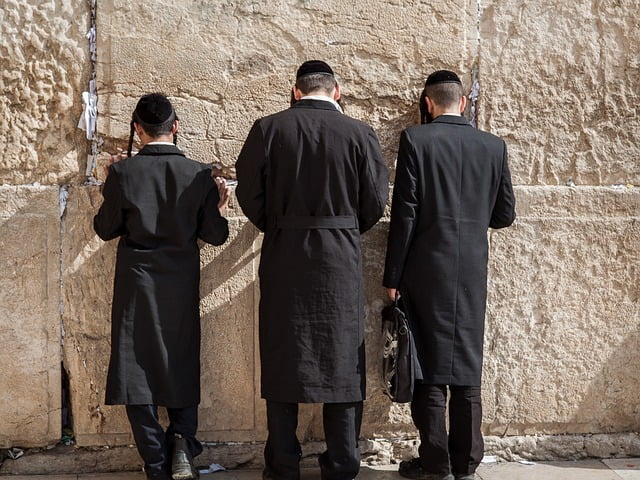
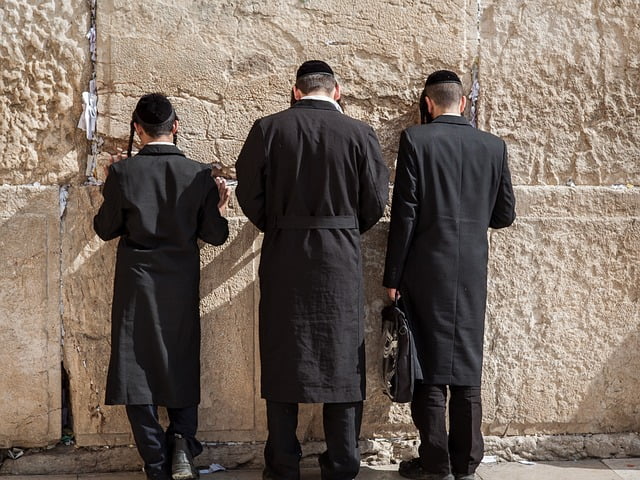
Have you ever pondered why some Jews sway back and forth whilst praying or reading the Torah?

Why don’t Christians practise this, or do they? It appears this action is known as shuckling, and it’s conceivable that Jesus Himself may have engaged in it. If He did, you can be certain the Apostles did as well.

Implications?

This physical movement is most commonly observed amongst Orthodox Jews. The practice is ancient and deeply rooted in Jewish liturgical traditions, though it is not explicitly prescribed in the Torah or Talmud. No one is certain of the origins, but several explanations have been offered within Jewish tradition and scholarship. It’s fascinating to examine these because, as Christians, they have implications for us too.

Some suggest that shuckling is a manifestation of the worshipper’s fervent devotion and emotional intensity in prayer. By engaging the body in prayer, the worshipper expresses total immersion and a physical manifestation of spiritual fervour.

Another explanation gives the idea that the rhythmic movement aids concentration on prayer and study, facilitating deeper focus and engagement with the texts. The physical motion is believed to assist in memorising and internalising the prayers and scripture. It certainly keeps you awake!

A flickering flame…

A more off-the-wall explanation relates shuckling to the motion of a flame, which naturally moves back and forth. This symbolism alludes to the flame representing the soul’s desire to ascend to God. Thus, the swaying in prayer is seen as an emulation of this spiritual yearning, reflecting the soul’s attempt to reach towards the divine. A bit odd, but you may see their point! Historical and practical reasons have also been suggested for the origin of shuckling. Some sources indicate that, in medieval Europe, where space was limited in synagogues, this swaying motion allowed more individuals to squeeze in. Additionally, in cold climates, the movement helped keep individuals warm during lengthy periods of prayer.

Now, some of these explanations are bound to make one smile…

Deep devotion

The concept of shuckling can be appreciated as a meaningful expression of piety and devotion, highlighting the embodiment of prayer and the deep, personal engagement with God. It underscores the ‘whole-person’ nature of worship, involving not just the mind and spirit but also the body, in a heartfelt expression of faith and devotion not far removed from our own charismatic emphasis on experiential, heartfelt worship, and the belief that physical expressions can be a powerful component of one’s spiritual life and connection with God.

God stirs our heart to worship Him, and whilst we might not adopt the entire practice of shuckling, we do raise our hands in worship!

Early Church

Early Christian worship and prayer life emphasised practices such as the reading of Scriptures, preaching, communion (the Eucharist), baptism, and prayer, reflecting the early Church’s efforts to define its identity and practices distinct from Judaism. While early Christians were deeply influenced by Jewish scriptural and worship traditions, given that Christianity emerged from Judaism, the specific liturgical practices and physical expressions of prayer (such as shuckling) were not a focus of their writings. They prayed as they did, but shuckling or not, we are just not informed.

That being said, the early Church Fathers spoke about the significance of fervency in prayer, the posture of prayer (e.g., kneeling, lifting hands), and the engagement of the whole person—body, soul, and spirit—in worship. For instance, Origen, an early Christian scholar and theologian, wrote extensively on prayer, emphasising spiritual and heartfelt connection with God, yet he did not specifically mention practices akin to shuckling.

There is merit in the concept of shuckling.  Isaiah 66:2 (a previous post) refers to those who tremble at God’s word. I am not directly suggesting that one should adopt shuckling, but rather, I am advocating for a heart attitude characterised by a deep longing and yearning for God’s presence, to the extent that it feels as though one’s entire being is stirred, provoked, and challenged to pursue God like never before.

Don’t be passive

My friend Paul Cain used to encourage me that I was only ever as close to God as I wanted to be. A passive stance towards God is not an option; our quest for intimacy with Him is, in fact, a Spirit-led invitation—God desires us to draw near to Him. It is then that the allurements of the world begin to fade, overshadowed by the magnificence of Christ.

You may not physically rock back and forth as you worship and read the Bible, but your heart might very well be crying out, “Oh God, Oh God! I yearn for Your presence, Your closeness, Your influence upon my heart and life. Touch me, Lord—help me to grow in trust and confidence in Your Word and Your faithfulness.”

If that’s your heart, it sounds like some great shuckling to me!

Stephen

StiffNecked

If there’s one thing that could be said about Stephen’s presentation of the gospel in the book of Acts, it’s “courage.”

Stephen’s well known sermon in Acts 7, especially his change in tone in Acts 7:51 where he confronts the Jewish council, saying, “You stiff-necked people, uncircumcised in heart and ears, you always resist the Holy Spirit. As your fathers did, so do you,” marks a significant moment. Bible college wouldn’t have prepared him for such bold witnessing, and even today, it might raise an elder’s eyebrow!

Great sermon!

Welcome to Acts 7! Stephen’s sermon to the Jewish council begins brilliantly. So brilliantly, in fact, that one might assume he had memorised the first five books of the Bible. That’s why, as I read it, it caught my attention. I’ve been reading and rereading them, and then suddenly, reading Acts, I thought, “Hello!” And then, just as everything seemed to be going smoothly for Stephen, and he was about to win the Sunday School Bible memorisation gold cup, he throws a curveball. He not only captured their attention but held it with a firm grip! “You stiff-necked people!” They certainly didn’t see that one coming!

Off-piste

What was going on? We talk simplistically of sermons “landing,” but this was so sudden that as you read it, all you can think about is “Brace, brace, brace!”

This abrupt shift isn’t off-piste but rather a calculated move to confront his audience with their persistent resistance to God’s message and messengers. In the previous chapter of his life in Acts 6, he’s marked out as a man full of grace and power, who was doing great wonders and signs among the people. The hallmarks of the Holy Spirit’s anointing and activity in his life were evident not just in his actions but also in his words. But really, “stiff-necked”? Stephen’s familiarity with scripture has deeply influenced his thinking, worldview, and vocabulary.

The term “stiff-necked” is also found in Exodus 33:3, 5; 34:9 (remember, Stephen is guiding us through the Pentateuch, not embarking on a walkabout) and describes the Israelites’ obstinate disobedience and resistance to God’s direction and guidance. In the abrupt halt to his sermon, Stephen draws a parallel between his audience’s rejection of Jesus (and the Holy Spirit’s work) and Israel’s historical disobedience and idolatry. Perhaps, this sermon ended precisely on the punchline. There’s no need to ask what the response should be to the message – it’s blatantly obvious, yet nevertheless rejected. Talk about preaching for a verdict!

Stephen’s sermon up to this point had been a retelling of Israel’s history, illustrating God’s faithfulness despite the people’s recurring unfaithfulness.

Preaching for a verdict!

His sudden shift to direct confrontation comes almost as an old-days prophet, where direct, often harsh, confrontation was employed not out of anger but out of a deep desire for the people to turn back to God. But it’s the sermon that keeps on giving. Stephen is relentless. I wonder if as he felt God’s anointing on him, he suddenly knew where this was going.

Not content with merely labelling them as stiff-necked, Stephen asserts that they are “uncircumcised in heart and ears,” undoubtedly extending and intensifying his rebuke.

Although physically circumcised and outwardly part of God’s covenant people, they are internally and spiritually resistant to God’s voice and Spirit. If that didn’t stir them up, nothing would, especially considering his subsequent emphasis on true circumcision as a matter of the heart (Deuteronomy 10:16; Jeremiah 4:4).

In the background

Stephen is a man on a mission. More than that, he is God’s man on a mission, and what is about to happen will mark a turning point in the life of the Church. Amidst the agitation of the Jewish council, there is the attentive focus of a distinguished Roman citizen from Tarsus, a Jew, circumcised on the eighth day, of the people of Israel, of the tribe of Benjamin, a Hebrew of Hebrews; in regard to the law, a Pharisee.

Stephen’s intent isn’t merely to accuse but to awaken his listeners to the gravity of their position before God, especially in light of their rejection of Jesus, whom he proclaims as the Righteous One foretold in the Scriptures.

Coming to a conclusion

Our lives are full of purpose; we’re not always aware of it, but God never wastes the lives of His people. Stephen is so loved that when his time comes, Jesus, seated at the right hand of the Father, will rise to His feet to greet him.

And so, sticking to the sermon notes of the moment, Stephen continues his gentle admonition: “You always resist the Holy Spirit. As your fathers did, so do you. Which of the prophets did your fathers not persecute? And they killed those who announced beforehand the coming of the Righteous One, whom you have now betrayed and murdered, you who received the law as delivered by angels and did not keep it.”

This is not how you win friends and influence them, but it was the right thing to say, and the Lord would commend him for it.

They didn’t seem terribly blessed, encouraged, or impressed. But with a different heart, they could have been. Hearts hardened like bronze, they responded – enraged – and ground their teeth at him. The congregation were like American XL Bully dogs, off the leash, growling and angry.

So much for them and their response to the gospel. Stephen, on the other hand, full of the Holy Spirit, gazed into heaven and saw the glory of God, and Jesus standing at the right hand of God. And as the musicians came up, he uttered the last part of his sermon, a sermon that would be written down and read until the last day of history… “Behold, I see the heavens opened, and the Son of Man standing at the right hand of God.”

Praying Jesus’ prayer

That got their attention. There’s much more that can be said, especially as they respond with ferocious violence- particularly Stephen’s prayer for the Lord to forgive them as they didn’t know what they were doing. A prayer that Stephen knew would fall on the ears of One who prayed it Himself.

In these challenging times it’s good to reflect on Stephen’s courage in sharing the gospel, even when faced with hostility. It’s not always easy to speak up for what we believe in, especially when we know it might not be well received and Stephen’s bravery reminds us that sometimes, speaking the truth requires courage.

Stephen’s story is a challenge for us to be bold in sharing God’s love and truth, even if it’s uncomfortable or met with resistance.

Lets also have the conviction to speak with empathy and compassion, knowing that our words have the power to bring hope and healing to those around us, even in the midst of difficult circumstances.