6,879 times…

and God’s grace still is sufficient.

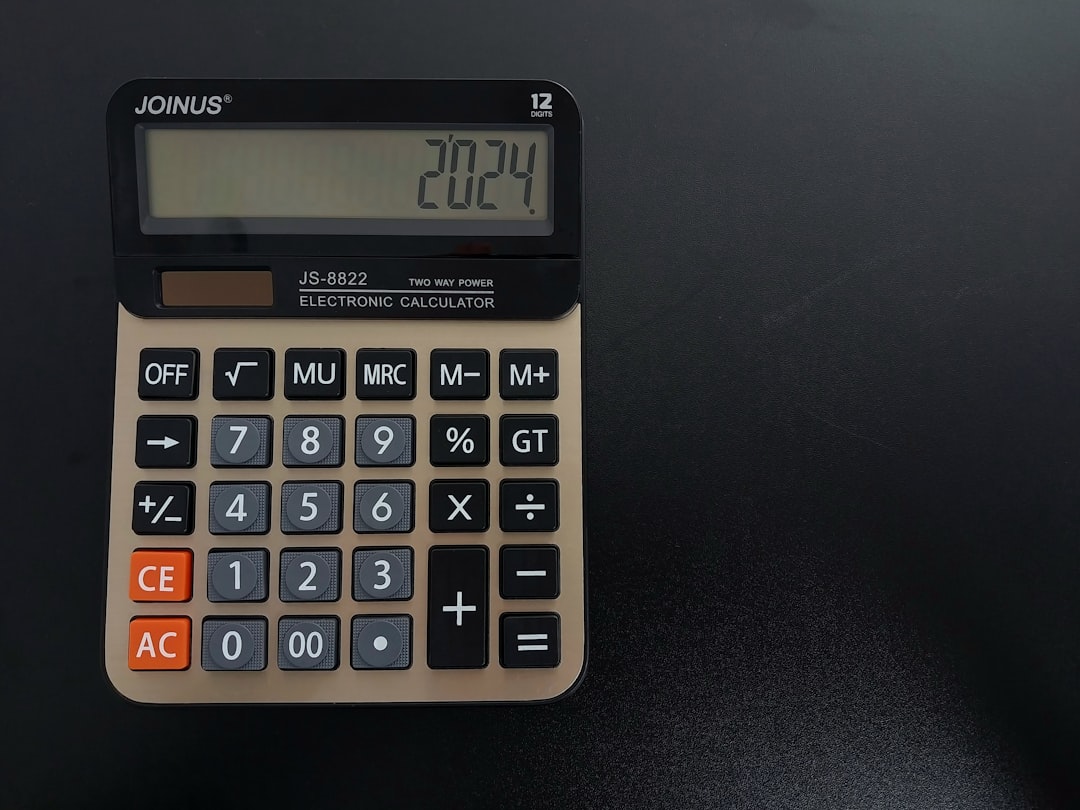
a calculator sitting on top of a table

For the last 47 years as a Christian I’ve noticed something. Whenever people talk about what God is doing, the numbers are almost always neat and round. A thousand leaders being raised. A hundred churches being planted. Ten thousand missionaries being sent. They sound complete, perfect, inspiring. But life doesn’t usually work in clean figures like that. You don’t often hear about 842 leaders or 89 churches. Yet grace – the kind God gives – is never bothered by the uneven, the messy, or the oddly specific.

That matters when we talk about forgiveness. Not just the first time you needed it. Not just the second. But the times when the same sin keeps coming back. You fall again. You confess again. You make the same promise again. And somewhere deep inside, you start to wonder, “Surely God must be tired of me by now.” It can feel like you are running through a field of treacle.

Peter once asked Jesus a question I think most of us have carried quietly. “Lord, how often will my brother sin against me, and I forgive him? As many as seven times?” In Peter’s mind, seven was generous – the perfect number, but Jesus’ response of, “I do not say to you seven times, but seventy-seven times” wasn’t giving Peter a new total to keep track of. He was showing him something bigger: God’s forgiveness has no stopping point. 490 is not the cut off point.

That doesn’t mean sin is harmless. The cross tells us exactly how deadly it is. But it also tells us the cost has already been paid – in full. The blood that cleansed me in 1978 is the same blood cleansing me now. Whether you’ve fallen for the same sin the fourth time or the four-thousand-and-sixty-seventh, His grace hasn’t changed.

The truth is, it’s not God’s patience that runs out. It’s ours. We get tired of coming back, not because His mercy is less, but because our pride whispers, “You should be past this by now.” Yet the gospel keeps pulling us to the same place – the foot of the cross – because there’s nowhere else to go. And there’s no graduating from needing it.

So if today you’re asking Him for forgiveness again – for the same thing you asked about yesterday – you’re not pushing Him to the edge of His mercy. You’re stepping once more into a fountain that never runs dry. He has already said, “Whoever comes to me I will never cast out.” That promise doesn’t fade with repetition.

The accuser will tell you repeated failure means you’ve gone too far. But the fact you keep returning is proof His grace is still working in you. You don’t keep coming back because you take sin lightly. You keep coming back because you know where hope is found – and you know the One you come to is faithful.

So yes, it’s possible to be forgiven for the same sin, not just once, twice, or three times, but even 6,879 times, and still not reach the limit. God’s grace doesn’t live in tidy numbers. It lives in Christ. And Christ is without measure.

When the day comes that sin is finally gone, you won’t be counting how many times you were forgiven. You’ll be lost in the wonder that not once did He turn you away. Amazing grace indeed.

Weighing in Together

Creating Safe, Spirit-Led Spaces for Prophetic Ministry

silver corded microphone in shallow focus photography

One Sunday morning, a few years ago, I approached the person who was hosting to ask for the microphone to share a prophetic word. I didn’t know what I was going to share but just knew that when the worship finished, I would have it. The worship finished, and in that moment I spoke about being a people who were ploughing the ground. It was hard work, but God was stirring us for something more – it was a call. The worship finished, and we sat down to hear the visiting speaker, Gerald Coates. Gerald’s message was about the call of Elisha ploughing with oxen and his encounter with Elijah. Exciting confirmation.

In the church at Corinth, prophecy was an open thing. Paul wrote, “Let two or three prophets speak, and let the others weigh what is said.” (1 Corinthians 14:29) Clearly that ‘weighing’ happened after the prophecy was spoken, and then the whole church took part. Someone felt prompted by the Spirit, they spoke, and everyone listened together, testing what was said in real time, on the hoof.

These days, it often works differently. A person senses they have something from the Lord, walks to the front, and before a word is spoken, they’re gently urged to explain it. Questions get asked. Wording gets adjusted. Toned. Softened. Can you do it in modern English, not the KJV? (Yes, it’s still around!) Sometimes the whole shape of it changes before the congregation hears a single syllable. Now, that can be a good (and sometimes necessary) safeguard. But it does raise a question. If a word has already been checked, do we still weigh it afterwards? Or do people think, “Well, the leader allowed it, so it must be fine”?

When the whole responsibility for discernment falls on the person hosting the meeting, the rest of the church can drift into being passive listeners instead of active participants. That’s a heavy load for any one person, especially if they don’t move naturally in the prophetic. And then there’s the human side. If you’ve walked all the way to the front only to be told “not now,” that’s a long walk back to your seat – longer still if you’re trying to make it look like you just remembered something urgent!

There’s another challenge. When someone shares their word privately before giving it, the life can drain out of it. They end up focused on remembering it exactly as they told the leader instead of listening to the Spirit as they speak. And sometimes, a person doesn’t have anything prepared at all. They just feel the nudge of the Spirit in the moment and step forward in faith, as I shared at the beginning of this post. That kind of immediacy is something we see in the New Testament church.

We haven’t yet reached the “woah!” controversial level of freedom Paul describes in 1 Corinthians 14:30, “If a revelation is made to another sitting there, let the first be silent.” That’s not chaos – that’s humility. It’s the understanding that God may speak through someone else, right in the middle of another person’s word, and it’s okay to yield. I’ve never seen that in operation and to be honest, I’m not really sure what Paul was alluding to, or trying to correct. I’d like to see it happening!

So, what does it actually mean to ‘weigh’ a prophecy? Is it where we say something was way off the mark? Seriously though, biblically, it’s more than deciding who gets the microphone. It’s the gathered church, listening with the Spirit’s help, asking questions like: Does this line up with Scripture? Does it point people to Jesus? Does it encourage, strengthen, or comfort? Does it bring peace rather than confusion? Does it carry the character of the Spirit? That’s not the work of one or two leaders. That’s the work of the body – even the ones that ‘hear nowt, say nowt, and do nowt!’ We are all included in this. God is speaking to us all.

If you’re hosting a meeting and you’re not prophetically gifted, you don’t have to carry that weight alone. You can lean on others you trust, or pray quietly for wisdom. Your job is not to control the meeting, but to keep it Christ-centred and open to what the Spirit is doing. That’s very important. God is doing great things today, and we want to be listening, watching, available. Hineni.

Trust makes a big difference here. In Corinth, prophecy flowed in the context of relationship. When people trust their leaders and the culture of the church, they can step forward without fear. That’s what we want to cultivate. And trust grows when weighing is visible, when it’s done with grace, and when “not now” is said in a way that still affirms the person’s willingness to contribute – something my friend and elder models perfectly, probably because he loves not just the church, but the people in it.

Of course, pre-vetting can help protect from confusion or harmful extremes, but it must never replace the call for the whole body to weigh together. Even a word that’s been checked beforehand still needs the ears of the church. Sometimes, the Spirit may speak in ways no one expected, not even the person who first heard it privately.

In the end, prophecy isn’t about a flawless process, rather it’s about a community listening together for the voice of Jesus, holding on to what is good, and letting go of what is not. For us, it’s about creating a place where people can step forward in faith without fear of the long walk back, and in that kind of culture, the Spirit can work freely, just as He did in Corinth.