

What Will God Be Like in 100 Years?

Dreams

The pace of change today is simply breath-taking. Nothing and no-one is exempt, the only thing  guaranteed for the future is there will be yet more change. In the face of the dark days we are in it is a grim and sobering venture as we face the challenges and opportunities of the years to come.

The apostle Paul was mindful of the effects of change in his lifetime declaring, “the world in its present form is passing away.” (1 Cor 7:31) What will life be like 100 years from now? We can barely imagine what it will be like in fiver years time!  We change, our cities and culture certainly changes, but what about God?

What will God be like in 100 years?

You don’t have to be a prophet to predict that in 2123, 100 years from now – God’s love will be infinitely transcendent.

Due to the shallow romanticism of secular culture, we tend to view the love of God in the same way popular music, art, television drams and literature view love. 1 John 4:7-11 gives us this brilliant statement with respect to the love of God:

Beloved, let us love one another, for love is from God, and whoever loves has been born of God and knows God. Anyone who does not love does not know God, because God is love…. In this is love, not that we have loved God, but that he loved us and sent his only Son to be the propitiation for our sins. Beloved, if God so loved us, we also ought to love one another.

The apostle John reaches out with the urgent admonition for Christians to love one another in the very character of God.  “Love is from God,” he tells us.

He will be pouring love into our hearts…

What he means is that Christian love comes from God Himself. This love is not natural to fallen humanity. We do not have it as a default position in our character!  It originates in God and is a divine gift only to His people. When we are transformed by the power of the Holy Spirit, we are given a capacity for this supernatural love that has God as its source and foundation. It is a love that is flowing from Him to Him.

When John says that “whoever loves has been born of God and knows God,” he is not teaching that every human being who loves another is therefore born of God. It is much more than that.

The kind of love of which he speaks comes only from regeneration, being born-again and transformed by the work of the Spirit of God. Without the Holy Spirit’s deep, penetrating transformation of the human heart, no one has this capacity for love. No unsaved person has this kind of love, and no saved person lacks such love –  “Anyone who does not love [in this manner] does not know God.”

He will still be Love…

John does not stop there. Not only is love from God but God is love.

This is the key the staggering truth of what God will be like in 2116 – He will be exactly as He is now. Not the slightest change will have occurred.

Love is such an intimate aspect or attribute of the character of God, that He is not just loving, but He is love. It is who He is, and not just what He does. That is the difference between us. We are loving, He is love. He is the infinite expression of love.  Any view of Him that neglects to include within it this profound sense of divine love is a distortion of who God is.

As Christians we believe in a God who is simple and not made up of parts. God is not one part sovereign, one part just, one part immutable, one part omniscient, one part eternal, and one part loving. Rather, He is all of His attributes at all times. I’ve just finished reading ‘Simply God’ by Peter Sanlon ((https://www.amazon.co.uk/Simply-God-Recovering-Classical-Trinity/dp/1783591048)) – it is probably one of the best books I have ever read in my life!  Peter Sanlon has helped me realise that to understand any single attribute, we must understand it in relation to all His other attributes. The love of God is eternal and sovereign. I want to add the words, “deeply”, “profoundly”, “infinitely” to almost everything I consider about God’s attributes!

He will still be unchangeable not just unchanging…

The love of God is immutable and holy.

We must treat all of His other attributes in the same way. God’s justice is loving and eternal. His holiness is loving and omniscient. Our concept of the love of God will stay on track only as we understand His love in relationship to His other attributes.

Whatever else God’s love is, it is holy. His love is therefore characterized by the qualities that define holiness – His transcendence and purity.

  • First, God’s love is transcendent. It is set apart and different from everything we experience in creation.

  • Second, God’s love is pure. His love is absolutely flawless, having no selfishness, wickedness, or sin mixed in with it. God’s love is not ordinary or profane.

He will still be incomparable, unmatched, unequaled, unrivalled and have the supremacy in all things…

It is a majestic, sacred love that goes far beyond anything creatures can manifest. No shadow of evil covers the brightness of the pure glory of the love of God.

The love of God is in a class by itself. It transcends our experience. Nevertheless, it is a love that He shares in part with us and expects us to manifest to each other. He grants to His people—insofar as is possible given the Creator-creature distinction—His holy love (Rom. 5:5).

So, what will God be like in 100 years? Exactly what He is today, no less or more awesome, gracious, kind, merciful, forgiving, tender, compassionate . . .

He is everything God could possibly be – and whether we are in heaven or on Earth, that will be our continual bliss-filled, awesome experience.
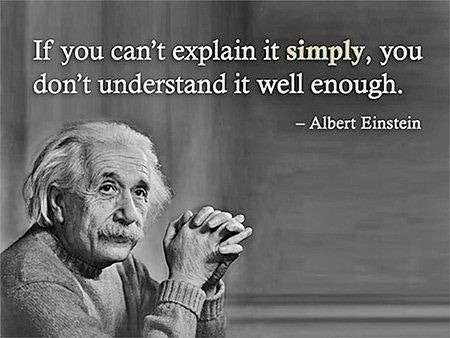
Do you understand the gospel

Do you understand the gospel

Do you know what the gospel is all about – do you understand it well? I’m not sure if Einstein actually made the assertion that, “If you can’t explain it simply, you don’t understand it well enough”, but I do know that RC Sproul said something similar suggesting that sometimes the only way that you could fully grasp a doctrine was to prepare to teach on it.

Extremely good news

The gospel is called the ‘good news’ because it addresses the most serious problem that you and I have as human beings, and that problem is simply this: God is holy and He is just, and I’m not. And at the end of my life, I’m going to stand before a just and holy God, and I’ll be judged. And I’ll be judged either on the basis of my own righteousness, or lack of it – or the righteousness of another.

The good news of the gospel is that Jesus lived a life of perfect righteousness, of perfect obedience to God, not for His own well-being but for His people. He has done for me what I couldn’t possibly do for myself. But not only has He lived that life of perfect obedience, He offered Himself as a perfect sacrifice to satisfy the justice and the righteousness of God. It is without doubt, the greatest news we could ever receive.

Defining the gospel

The Greek term “gospel” (ev-angelion) in Paul’s day distinguished the Christian message from that of other religions. An ‘ev-angel’ was news of a great historical event, such as a victory in war or the ascension of a new king, that changed the listeners’ condition and required a response from the listener.

The gospel is news of what God has done to reach us – it is not advice about what we must do to reach God. It’s God’s initiative! God reached out to us whilst our back’s were turned!

God has entered the world in Jesus Christ (fully God and fully man) to achieve a salvation that we could not achieve for ourselves which now converts and transforms individuals, forming them into a new humanity, and eventually will renew the whole world and all creation. This is the ‘good news’—the gospel.

And it is good news in three important ways.

The gospel is the good news of gracious acceptance.

Jesus lived the life we should live. He also paid the penalty we owe for the rebellious life we do live. He did this in our place (Isaiah 53:4-10; 2 Cor 5:21; Mark 10:45). We are not reconciled to God through our efforts, but through his efforts alone.

When we trust in Christ for our acceptance with God, rather than in their own moral character, commitment, or performance we are simultaneously sinful – yet accepted. We are more flawed and sinful than we ever dared believe, yet we are more loved and accepted than we ever dared hope at the same time.

“Legalism says God will love us if we change. The gospel says God will change us because He loves us.” – Tullian Tchividjian

Of course, God’s grace leads me to the place where i don’t want to do the things that displease Him, and that is yet another way we see the power of the gospel – the gospel has power to change us from the inside out.

The gospel is, radically different from religion. Religion operates on the principle: “I obey, therefore I am accepted”. The gospel operates on the principle: “I am accepted through Christ, therefore I obey.” A lack of deep belief in the gospel is the main cause of spiritual deadness, fear, and pride in Christians, because our hearts continue to act on the basis “I obey, therefore, I am accepted.” If we fail to forgive others–that is not simply a lack of obedience, but a failure to believe we are saved by grace, too. If we lie in order to cover up a mistake–that is not simply a lack of obedience, but a failure to find our acceptance in God rather than in human approval. So we do not ‘get saved’ by believing the gospel and then ‘grow’ by trying hard to live according to Biblical principles. Believing the gospel is not only the way to meet God, but also the way to grow into him.

“Worship Transforms, Teaching Incarnates, and Ministry Penetrates” – Jack Hayford

The gospel is the good news of changed lives.

Paul says to Christians, ‘your life is hid with “Christ in God’ (Col 3:3), and in numerous places he says that we are now ‘in on the one hand, that the Father accepts us in Christ and treats us as if we had done all that Jesus has done (cf. Col 3:2a). But this is also means Christ’s life comes into us by the Spirit and shapes us into a new kind of person. The gospel is not just a truth about us that we affirm with our minds, it is also a reality we must experience in our hearts and souls.

An example of this is seen in 2 Corinthians 8:9 where Paul wants the people to give an offering to the poor. He says, “I don’t want to order you. I don’t want this offering to simply be the response to my demand.” He doesn’t put pressure directly on the will (saying ‘I’m an apostle and this is your duty to me!’) nor pressure directly on the emotions (telling them stories about how much the poor are suffering and how much more they have than the sufferers).

Instead, Paul vividly and unforgettably says, “You know the grace of our Lord Jesus Christ, that though he was rich, yet for your sakes he became poor, so that you through his poverty might become rich” (2 Cor 8:9). When he says ‘you know the grace’—he uses a powerful image, bringing Jesus’ salvation into the realm of money and wealth and poverty. He moves them by a ‘spiritual recollection’ of the gospel. Paul is saying, ‘Think on his costly grace. Think on that grace until you are changed into generous people by the gospel in your hearts.’

So the solution to stinginess is to focus on the generosity of Christ in the gospel, where he poured out his wealth for you. Now you don’t have to worry about money—the cross proves God’s care for you and gives you security.

Now you don’t have to envy any one else’s money. Jesus’ love and salvation confers on you a much more remarkable status—one that money cannot give you. This is just grace upon grace.

Faith in the gospel re-structures our motivations, our self-understanding and identity, and our view of the world. Behavioural compliance to rules without heart-change will always prove to be superficial and fleeting. The gospel changes your heart.

The gospel is the good news of the new world coming.

The gospel then, is not just about individual happiness and fulfilment. It is not just a wonderful plan for ‘my life’ but a wonderful plan for the world. God’s world.

It is about the coming of God’s kingdom to renew everything. Gospel-centred churches do not only urge individuals to be converted, but also to seek peace and justice in our cities and in our world

Christ wins our salvation through losing, achieves power through weakness and service, and comes to wealth via giving all away. Those who receive his salvation are not the strong and accomplished but those who admit that they are weak and lost.

This pattern creates an ‘alternate kingdom’ or ‘city’ (Matt.5:14-16). in which there is a complete reversal of the values of the world with regard to power, recognition, status, and wealth. When we understand that we are saved by sheer grace through Christ, we stop seeking salvation in these things.

The gospel at its very least, creates a people with a whole alternative lifestyle and agenda. Racial and class superiority, accrual of money and power at the expense of others, yearning for popularity and recognition–all these things are marks of living in the world, and are the opposite of the mindset of the kingdom (Luke 6:20-26).

Paul  put it so well when he said that he was not ashamed of the gospel because it is the power of God unto salvation. We underestimate the power of the gospel. Don’t pray for people to have dreams about Jesus, that is outside of the anything taught in scripture! Instead, pray a prayer that God will be happy to answer – that the gospel will have free reign and fruitfulness in the life of the unbeliever. The gospel is the news that Jesus Christ died and rose for our salvation in history. It is the power of God unto salvation.

The gospel is a transforming grace that changes our hearts and inmost motives, it is the power of God unto salvation.

The gospel brings a new ‘order’ in which believers no longer are controlled by material goods or worldly status and have solidarity with others across customary social barriers, it is the power of God unto salvation.

The gospel is the dynamic for all heart-change, life-change, and social-change. Change won’t happen through ‘trying harder’ but only through encountering with the radical grace of God.

Do we really understand what the gospel is all about? I doubt it. It is a vast wealth of treasure and discovery, and probably the very reason that he sometimes gives people long lives for. Discovery.

Discover and enjoy it for yourself. In the meantime, here is John Piper doing what he does best, introducing the gospel…