Reading time: 4 minutes
What happened to it?

What have you borrowed recently? There is something quietly familiar about the idea of ‘borrowing’. In Christianity it seems to be the rule that when someone borrows your books, do not expect to see them again. The books, that is. Not stealing, not quite owning. Just having for a time, as if the world were held together by a gentle trust. What’s yours is ours sort of thing. As a young child I was fixated with stories like that in the adventures of The Borrowers by Mary Norton. Small hands, borrowed objects, life lived in the margins. Scripture, in its own way, is not so different.
People in the Bible borrow things. Lots of things. Not always with ceremony. Sometimes with urgency. A widow, under the direction of a prophet, gathers jars that are not hers with oil flowing until there are no more vessels left to be ‘borrowed’. Elsewhere a trainee prophet borrows an axe head and unexpectedly loses it in the water, only for God to make iron float as if creation itself remembers who it belongs to. There’s others; bread, boats, rooms, tombs, to name but a few. The pattern keeps repeating. Things are taken up, used, and caught up in something beyond their ordinary purpose.
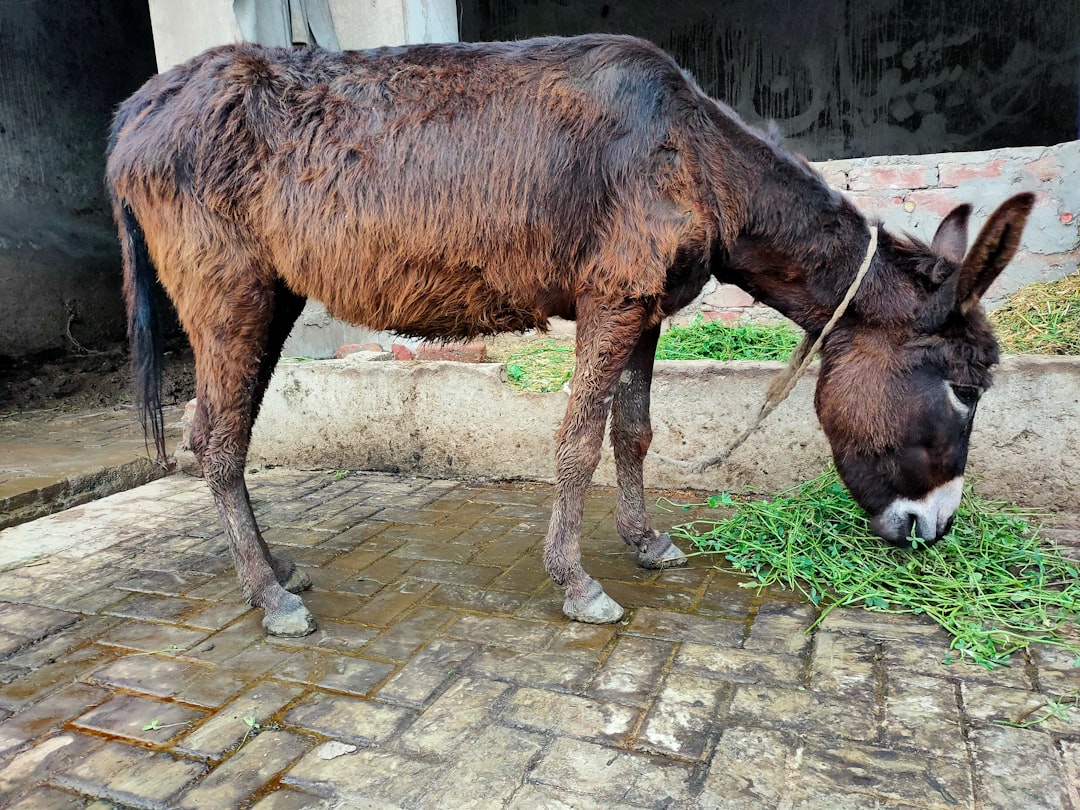
And then one day, over in Matthew 21:2–3, a donkey.
The day begins with Jesus sending two disciples ahead of him one morning unlike any other, with simple instructions, “You will find a colt tied, one that has never been ridden. Untie it and bring it. If anyone asks, say this: the Lord has need of it.” No negotiation. No contract. Just a statement that carries weight.
And it happened.
There is something almost disarming about that moment. The owner asks the obvious question. “Oy! Why are you untying the colt?” The disciples answer as they were told, “The Lord has need of it.” And that is enough. The animal is released, as if its whole existence had been waiting for that sentence. Try saying that to someone with a Discovery Tempest parked on their drive.
You start to see the pattern. What looks like borrowing is often something deeper. It is not casual use. It’s significant and carries a quiet authority, an authority that doesn’t argue its case, but simply speaks and things fall into place. The donkey is not seized, not fought over, not hidden away. It is handed over on the strength of a word.
That donkey was never just a donkey. It stands at a strange intersection of the ordinary and the unfolding purposes of God. One moment it is tied up, unnoticed, part of someone’s daily life. The next, it is at the centre of a moment that has been waiting to happen for generations. Not a war horse stomping on the ground and chomping on the bit, not a symbol of strength as we would define it, but something altogether more fitting for the kind of king who arrives without spectacle. Humility.
So, the question is, who took the donkey back?
Scripture does not say. And that silence is not an oversight, it is like a riddle that stubbornly refuses to resolved. For our part, we are left looking out of our window, coffee in hand, with the image and the question hanging in the air. The donkey had gone awol …
We need an inquiry! The compelling need is to trace the event, to ask how long donkey was gone, whether he was returned, whether the owner told the story afterwards – who was involved, and whether anything was signed? But the text gives none of that. It leaves us with the moment itself. The untying, the question, the answer, and the quiet compliance.
In the fast pace of the narrative and all the ‘hosanna-ing’ that goes on in the moment it is a remarkably small scene, easily missed, yet, because we are now focused on it, carries a weight that lingers. Not just because of what is explained, but because of what is not.
And somewhere in Jerusalem, you have to imagine a man called Bob standing in his doorway a few days later, looking at an empty space where a donkey used to be, telling his neighbour, “I did lend it out… but that’s Christian’s for you!”
It’s a tongue in cheek conclusion, but if you are still curious the answer is in Mark 11:2–3.