Reading time: 4 minutes
Prophesy or words of knowledge?
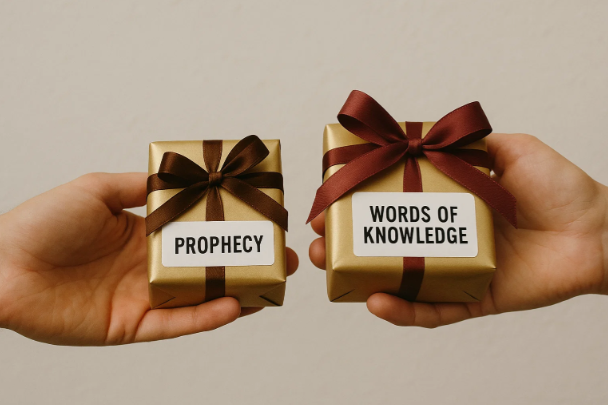
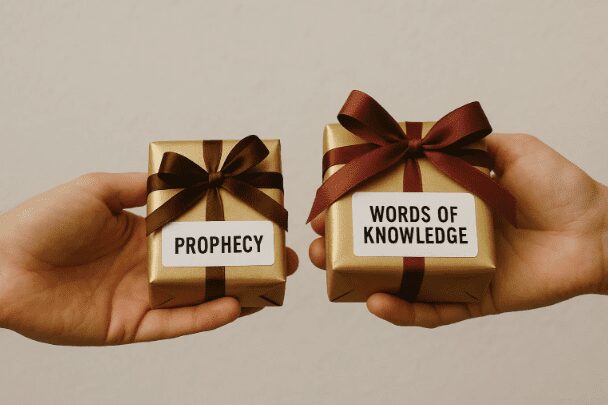
I might be a little pedantic here – but stay with me, there’s a familiar moment in many Spirit-filled gatherings; someone stands, voice steady, heart stirred, and says, “I feel the Lord is saying…” Mobile phones are lowered, eyes open and heads lift… Expectation rises. Prophecy, we assume. And often, what follows is often profound – specific, revealing, even healing.
But many times, what’s just been shared isn’t prophecy. It’s a word of knowledge. Still beautiful. Still essential. Still Spirit-breathed. Just not quite the same thing.
This isn’t about fault-finding or spiritual nit-picking. It’s a gentle nudge, I honour the hunger to hear God’s voice, and the faith it takes to speak out, but I believe the Church is best served when our understanding of spiritual gifts is shaped not by habit, but by Scripture. There’s more.
Prophecy and words of knowledge both flow from the same Spirit—but they run on different rails.
Prophecy, biblically speaking, is a Spirit-empowered declaration. It carries the voice of the Lord into a moment, a season, or a person’s life. It may offer encouragement, correction, comfort or direction – but it always requires discernment. Paul’s words in 1 Corinthians 14 make that clear: prophecy must be weighed. Not because God mumbles, but because we have an inbuilt ability to mishear. Our aim is never to impress, but to faithfully represent the voice of Christ. As Romans 12:6 reminds us, we prophesy “in proportion to our faith” – which is a sobering call to humility and alignment.
A word of knowledge, on the other hand, is not about direction. It’s revelation. The Holy Spirit illuminates something unknown to the speaker – an unseen detail, a condition, a name, a moment. It’s not guessed, sensed, or deduced. It’s given. And when it lands, it lands with divine precision. There’s no weighing required – just a response of wonder. “How did you know?” The answer is always the same: “I didn’t. But God did.” It’s that kind of knowing that says, “You are seen.” And in that moment, the gospel whispers: Jesus knows. Jesus cares.
I had a season where images would come to mind—seemingly random scenes that, when shared, unlocked hearts. In one moment, I described a line of children following a man. It turned out he was a teacher. That wasn’t deduction. It was revelation. And it built faith, not because I said it well, but because it was true. In another place in India I saw a man on his knees looking at a spreadsheet and being concerned because things didn’t add up. You guessed – he was an auditor!
So here’s the thing, over time, we’ve slightly blurred the lines. We’ve begun presenting words of knowledge as prophecy. A Spirit-revealed insight is shared, and because it’s powerful, we frame it with prophetic language. But that subtle drift creates confusion. The hearer thinks they’re being given direction, when what they’ve actually received is divine insight. One calls for discernment; the other invites wonder. If we don’t distinguish the two, we risk dulling both.
This isn’t about policing language—it’s about stewarding the gifts well. When we name them rightly, we honour the Spirit. We give prophecy the dignity it deserves, and we let words of knowledge do what they’re meant to: open hearts, build trust, and testify to the presence of Christ among us.
So here’s the invitation: keep stepping out. Keep listening. If the Lord shows you something—say so. But let’s not feel the need to label it prophecy if it’s not. A simple, “I believe the Lord has shown me something—can I share it with you?” is more than enough. That kind of clarity doesn’t hinder the Spirit. It honours Him.
Let’s realign—not to correct for correction’s sake, but to sharpen our hearing. When prophecy is weighed, and knowledge is rightly named, the Church is built up, Christ is exalted, and the Spirit is free to move just as He desires.
This is going to take a little work and some discussion but it’s worth it.
When all is said and done, eagerly desire the gifts – especially prophecy!