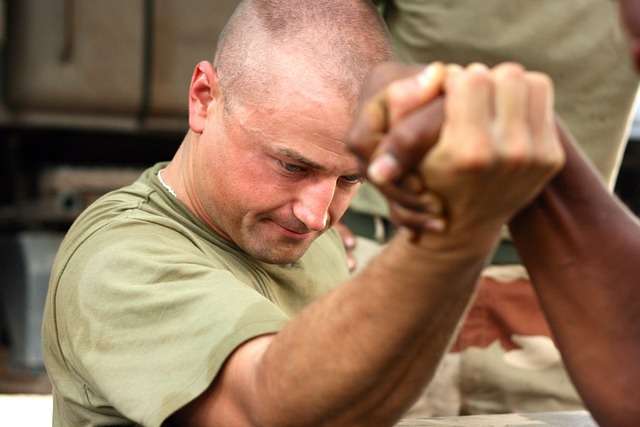
The War Between the Flesh and the Spirit: A Battle of Surrender
“I want you to know, brothers and sisters, that the gospel I preached is not of human origin.
I did not receive it from any man, nor was I taught it;
rather, I received it by revelation from Jesus Christ.” (Gal 1:11-12)
A difficult walk
It’s not long after you become a Christian that you realise that as Christians, we are in a lifelong battle between our flesh and the Spirit. It’s war! Our natural sinful nature rages against the work of the Spirit of God in us and countering it is Paul’s exhortation, “Keep in step with the Spirit” It’s not a path of gold right now, it’s a rugged one strewn with potholes and ruts and we need to walk with caution and care, holding each other’s hand.
This relentless conflict is described in Galatians 5:17 as a war between the flesh and the Spirit, where both are opposed to one another. It’s like water and electricity! You didn’t expect it when you first began to consider the Cross and what God has done for you, but it slowly dawns on you.
The bad list
The flesh is the part of us that desires to satisfy our selfish desires and passions and the manifestations of the flesh are a catalogue of depravity with nothing of eternal value in them and none of them bringing honour or worth to our lives or to the God we serve. The list is a shameful one: sexual immorality, impurity, idolatry, hatred, jealousy, anger, and drunkenness. The works of the flesh are not limited to the outward actions that we commit, but also include the inward attitudes of our hearts (Matthew 5:27-28).
The list is formidable, with a checkbox adjacent to each item, and throughout our lives, each one is marked off.
The reason I started with Galatians 1:11-12 is because the response to the dreadful works of the flesh in our lives is the Gospel, and it is important that the gospel we turn to is not something procured by a philosophical argument, but by the revelation of Jesus. The Greek word for “revelation” is “apokalupsis” (ἀποκάλυψις), which means “unveiling,” “disclosure,” or “manifestation.” It refers to the act of revealing something that was previously hidden or unknown. What is encouraging for us is that this uncovering of our predicament allows a response to grace, forgiveness and mercy allowing God’s kindness to flood our lives and help us begin living with values and character traits that are eternal and will never be stripped away. The contrast to the odious works of the flesh and the fruit of the Spirit listed in Galatians 5:22-23 is breathtaking.
It’s worth pausing to think on this, the works of the flesh are temporal. When you die, so do they but the fruit of the Spirit, the character of God embedded in your spirit is eternal. The “fruit” of the Spirit is a singular noun, indicating that these characteristics are interconnected and grow together in a person – they are the result or outcome of the Holy Spirit’s work in your life.
Character & fruit
The fruit are not mere external behaviours, but inward attitudes that flow from a heart surrendered to God and demonstrate a rich transformation of character that reflects the likeness of Christ. There is no law against the fruit of the Spirit – and no wonder, such beauty should exist eternally!
In Christ, we find love pure and true,
Joy and peace that constantly renew,
Patience and kindness, ever so bright,
Goodness and faithfulness shining with light,
Gentleness and self-control, guiding us right. (Galatians 5:22-23)
Living for God requires His help, and we remain dependent on Him, which will continue to be true for all eternity.
The war between the flesh and the Spirit is not just a battle of willpower, but a battle of surrender. In Romans 6:12-13, Paul writes, “Let not sin therefore reign in your mortal body, to make you obey its passions. Do not present your members to sin as instruments for unrighteousness, but present yourselves to God as those who have been brought from death to life and your members to God as instruments for righteousness.” We have a choice in the matter. We have to surrender one way or the other — we can choose to surrender ourselves to the passions of the flesh — or we can choose to surrender ourselves to God and allow the Spirit to work in us (Romans 6:12-13).
Lifelong battle
The ebb and flow of the battle is like the story of Moses in Exodus 17:11 but little by little as we keep in step with the Spirit, we overcome.
It’s not a battle of “mind over matter”, but one where we proactively and intentionally set our minds on things above, not on earthly things. for we died, and our life is now hidden with Christ in God. We need to willingly and without hesitation, cooporate with the power of the Holy Spirit to overcome the works of the flesh and produce the fruit of the Spirit in our lives (Galatians 5:16).
It’s a long, lengthy battle that we will face as long as we live in this world. It’s a battle between our natural sinful nature and the work of God in us. One leads ultimately to death and destruction and the other leads to life and growth in Christ.
What about moments of crisis in our conflict? Help is at hand! In addition to relying on the Holy Spirit, it’s also important to surround ourselves with our friends and family the church!
We can gather together with fellow believers, providing mutual encouragement and accountability in our journey with God fully convinced by Hebrews 10:24-25 which encourages us to “consider how to stir up one another to love and good works, not neglecting to meet together, as is the habit of some, but encouraging one another, and all the more as you see the Day drawing near.”
Being a part of such an absolutely brilliant and inspiring community of believers, where the gospel is powerfully proclaimed and God is passionately worshipped with wonder and enthusiasm, and where the gifts of the Spirit flow like a mighty river, provides invaluable support and guidance as we courageously navigate through the intense struggles of the flesh-spirit war.
Casualties?
As with war, there will always be casualties and it’s also important to remember we are not perfect, and we will stumble and fall at times, but… remember God is gracious and forgiving, and He will always welcome us back with open arms when we repent and turn back to Him. (1 John 1:9) Let’s remember, any work of the flesh in our lives (and it will happen time and time again.) is easily and quickly resolved in repentance and asserting faith in the forgiveness of God.
The hardest and most difficult thing about sin, or recurrent sin sometimes is not asking God to forgive, or having a resolution to turn away from sin but the earnest acknowledgment that in the words of the great hymn, “The vilest offender who truly believes, that moment from Jesus a pardon receives!”
Am I forgiven, have I reached a point of no return? Have I exhausted His love and forgiveness? Good questions but go back to our opening verse: “I want you to know, brothers and sisters, that the gospel I preached is not of human origin. I did not receive it from any man, nor was I taught it; rather, I received it by revelation from Jesus Christ.” (Gal 1:11-12)
This gospel is a gospel that saves, delivers, protects and brings life and liberty.
It’s a worn phrase now but worth saying again, “There is nothing we can do to make God love us more and absolutely nothing to make Him love us less.”
Here is love, vast as the ocean, loving kindness as a flood… Let the fruit of the Spirit bloom in your life and watch Christ’s glory shine through.