Reading time: 8 minutes
Why Romans 8 might be a verse for 2025
As a new Christian, I was taught to memorise scriptures, the first being John 3:16–17. Once that was locked in, there was a scramble for all the ‘biggies,’ which were necessary for when I couldn’t figure everything out but needed hope and context. These included the likes of Romans 8:28. I particularly liked that verse, even to the point that, at Bible college, I encountered Dr Martyn Lloyd-Jones and his brilliant commentary on Romans 8.
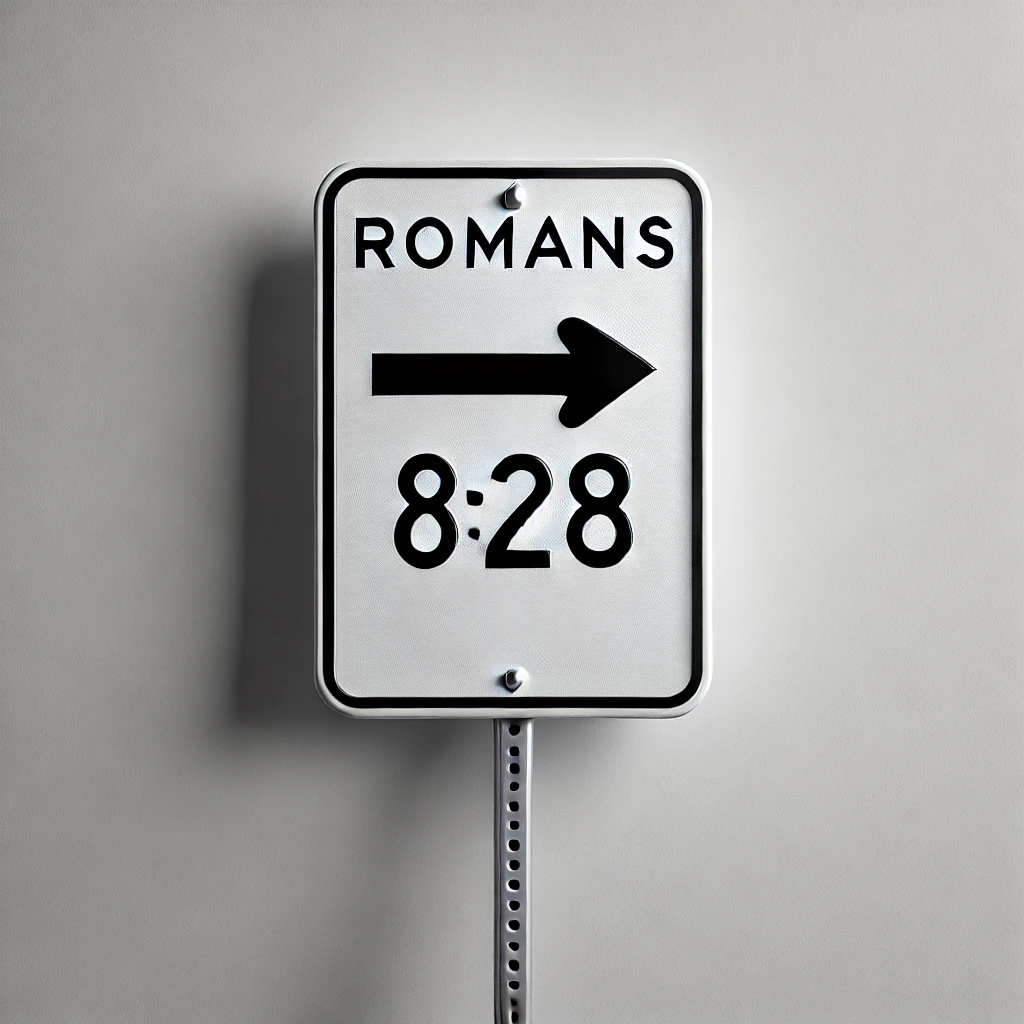
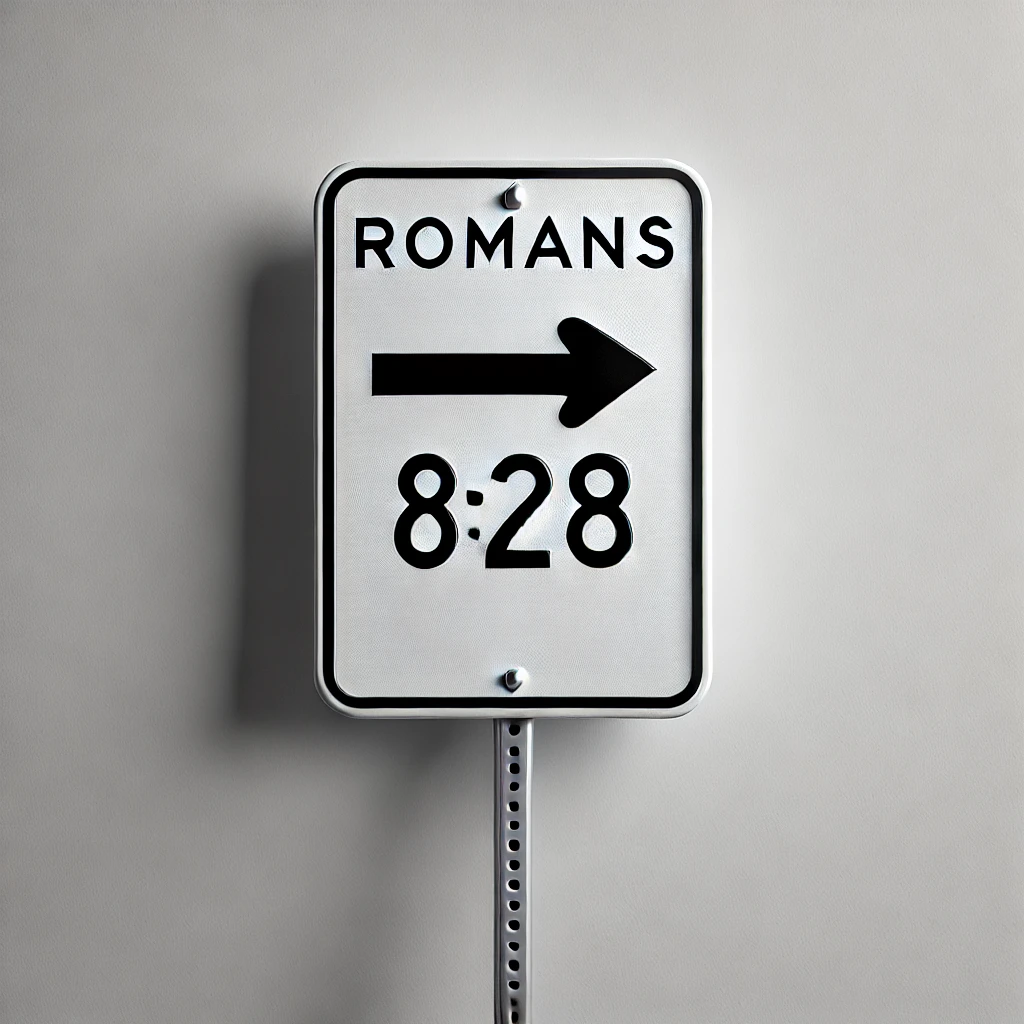
There is a moment in Romans 8 that takes your breath away—it’s a massive surge of encouragement, hope, and promise. The apostle Paul, writing to a group of believers navigating the head-on collision of faith and life’s harsh realities, offers a bold, almost audacious declaration: “And we know that for those who love God all things work together for good, for those who are called according to his purpose” (Romans 8:28). It’s the kind of verse that gets printed on coffee mugs or bookmarks, whispered in hospital rooms, and clung to like a lifeboat when the seas of life rage.
But have you ever stopped to consider how much weight this verse carries—and how much of that weight is hidden from view? Romans 8:28 carries the full weight of God’s ‘omnis’—his immeasurable power, presence, and knowledge of all things, carrying them all in the Christian’s favour, without any sign or hint of qualification, right, or reward for our own effort.
Life doesn’t always make sense. Loss cuts deep, dreams shatter, and prayers sometimes seem to echo back in silence. Nevertheless, Paul invites us into a reality that transcends what we can see, hear, or feel. All things—he says. Not some things. Not the selective good things; all things work together for good. The statement is staggering, not least because our experience sometimes tells a different story. Yet, despite that, we should consider this: what if the very tension we feel is a clue to something deeper? God is at work in every nook and cranny, every crack and shadow of our now Christ-owned life.
As always, our new way of life is lived by faith, and faith, by its very nature, requires us to trust in what we cannot fully see. It’s a bit like Noah’s rainbow scenario, where God promises Noah that when God sees the rainbow, He will remember. When there is a rainbow shimmering, God is close enough to you to see it Himself, meaning you are never left alone.
The promises of God often unfold in ways we don’t expect, on timelines we wouldn’t choose, and through paths we wouldn’t prefer. We know this intellectually, yet our hearts still ache when life feels like it’s falling apart, as it will do at times in 2025. It’s here, in the chasm between what we believe and what we experience, that Romans 8 speaks with surprising clarity—and offers us lavish grace, hope, and encouragement.
Brace yourself. Paul isn’t offering a simplistic, sentimental view of suffering. Far from it, his words are not just inspired but lived experience and reality. He writes as one who personally knows and has experienced shipwrecks, betrayals, imprisonments, and beatings. Yet, in all of it, he remains convinced—utterly persuaded—that God is weaving something extraordinary. It’s not a formula but a lens through which he invites us to see our trials not as isolated events but as threads in the full scope of God’s purpose.
I suppose this is where it gets uncomfortable; we want to know what God is doing—the blueprint, the explanation, the big why behind the pain. God sometimes withholds those answers—not out of cruelty, but because our vision is too limited to grasp the whole picture. When we look at the open sky, all we can actually see is a few miles to the left and right out of the thousands that are available. Imagine trying to understand a famous painting by staring at one brushstroke—or trying to grasp the wonder of Les Misérables or even Hamilton by listening to a single note. What we see is partial; what God is doing is comprehensive.
One of my favourite prophets, Isaiah, asserts for us, “My thoughts are not your thoughts, neither are your ways my ways” (Isaiah 55:8). It’s a humbling reminder that we are small, finite creatures trying to understand the infinite purposes of a sovereign God. The gap between our perspective and His is vast, but that is precisely why we can rest. If God’s ways are higher than ours, then His purposes—though mysterious—are ultimately good. Very good. Good by God’s definition, not by our “It’ll do!”
It might seem like a distraction, but the story of Joseph in Genesis is one of the clearest pictures of this truth, so it’s worth mentioning. Betrayed by his brothers, sold into slavery, falsely accused, and forgotten in prison—Joseph’s life seems like a series of random, tragic events. But when he looks back, he sees something astounding. “You meant evil against me,” he tells his brothers, “but God meant it for good” (Genesis 50:20). The very things that seemed to undo him were the means by which God accomplished His purposes.
This is the same God who works all things together for good in our lives. Similarly, it doesn’t mean we’ll always understand. Often, we won’t. Another brilliant and often-overlooked figure, Job, never received an explanation for his suffering. Paul’s own thorn in the flesh wasn’t removed despite his pleading. Jesus Himself prayed in Gethsemane for the cup to pass from Him, yet it was through the cross—the ultimate moment of apparent defeat—that salvation was accomplished.
We live in Gerald Ladd’s tension of the “already” and the “not yet.” Christ has triumphed, but the fullness of that victory is still unfolding. Our trials, then, are not meaningless; they are part of a story far greater than we can comprehend, at least in this life. This doesn’t diminish or negate the pain we feel; far from it. Grief is real; loss is real. But they are not and cannot be the final word. God’s promises anchor us, even when the waves threaten to pull us under.
When Paul says, “all things work together for good,” he isn’t suggesting that everything in life is inherently good. Evil is real, and its effects can be utterly shocking and devastating. What Paul is pointing to is God’s sovereign ability to take even the darkest moments and weave them—crochet them, stitch by stitch—into His redemptive purposes.
The cross itself is the ultimate example. What could be more horrific than the Son of God crucified by sinful men? And yet, through that act, God brought about the greatest good the world has ever known.
How do we navigate the gap between the promise and the reality? We begin by acknowledging our limited perspective. It’s the place where humility is essential. We don’t see the whole picture, just one piece of the jigsaw. But we know the One who does. Faith, by which we walk carefully and tentatively, doesn’t eliminate the mystery; it embraces it. That faith is steadied by trust, and trust itself is not the absence of questions but the refusal to let those questions rob us of hope.
We also learn to wait. That’s a difficult one! God’s timing rarely matches ours, but it is always perfect. You can’t outdo God when it comes to patience! The seed buried in the ground looks like death, but in time it brings forth life. The delays and detours in our lives may feel like dead ends, but in God’s hands, they are part of the journey.
It’s all one big admonition, challenge, and encouragement to fix our eyes on Jesus. He is the ultimate evidence that God can bring good out of anything. How? When we are tempted to despair, we look to the cross. When we are tempted to give up, we remember the empty tomb.
Romans 8:28 is worth memorising—it invites us to live in the tension of faith, where we don’t have all the answers, but we have the promise. And that promise is enough because it is rock-solid, anchored in the unshakable faithfulness of our God.
And when God is doing anything for our good, which He always is because He brings glory to Himself, when He does that, it is goodness to an astonishing extreme.